
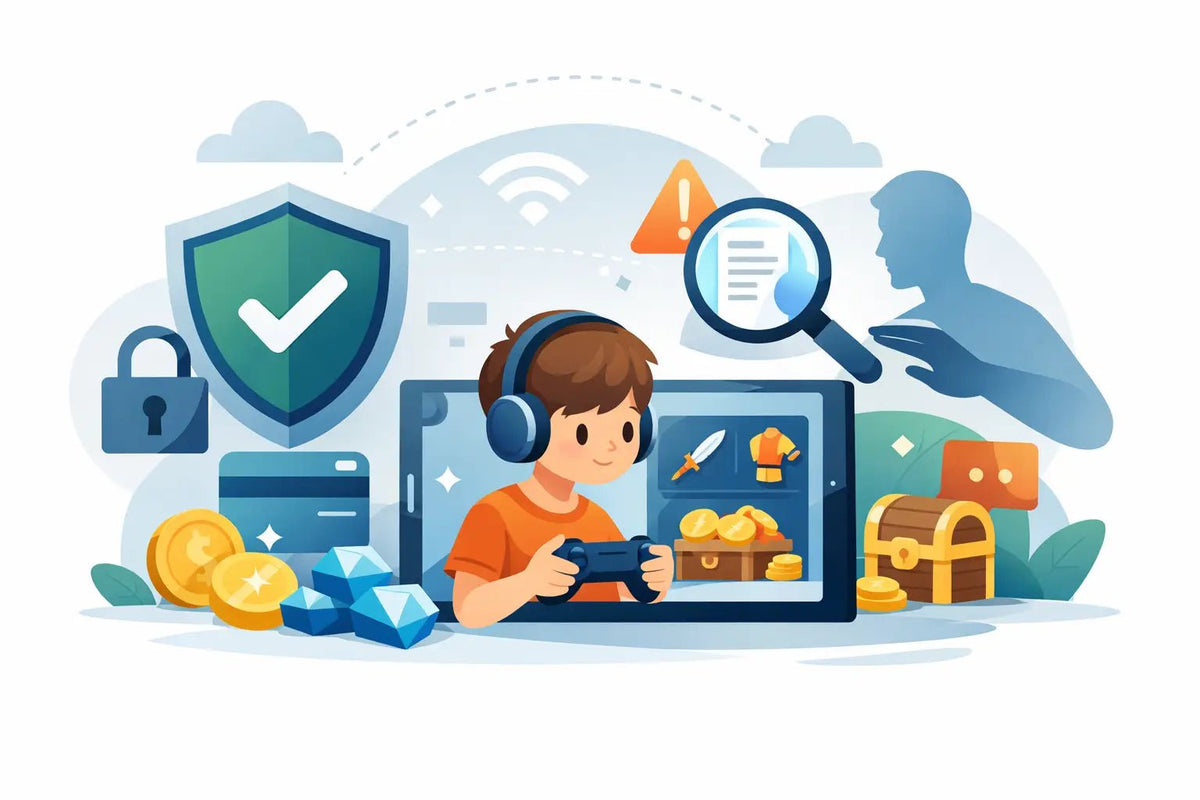
A rare pet, a legendary knife, or enough currency to finally get the item everyone in the server is talking about can feel like a huge deal. But before a kid taps Buy Now, there is one question worth asking: can kids buy virtual items safely? Yes, they can - but only when the purchase happens with clear rules, protected payments, and a marketplace that never asks for sensitive account information.
For players, buying an item should be exciting, fast, and drama-free. For parents, it should not mean surprise charges, stolen accounts, or a customer support nightmare. Here are the checks that make a real difference.
Can Kids Buy Virtual Items Safely? Start With Permission
The safest purchase is one a parent or guardian knows about. That does not have to turn buying a small game item into a big meeting. A simple family rule works: ask before using a card, digital wallet, gift balance, or saved payment method.
Parents can also set a spending limit per purchase or per month. Maybe a player can spend a small amount on a weekend, save up birthday money for a bigger item, or only buy when an adult approves checkout. The exact rule depends on the family, but a clear limit stops accidental overspending before it starts.
Players should be honest about what they are buying, too. “I need Robux” is not the same as “I want a limited pet in Adopt Me.” When everyone understands the item, game, and price, there are fewer surprises later.
1. Never Share a Password or Login Code
This is the biggest safety rule in gaming: no legitimate item seller needs your account password, two-factor authentication code, email password, or recovery code.
Scammers often make this sound normal. They may say they need to “verify” the account, load an item directly, confirm ownership, or fix a delivery problem. Do not fall for it. Once someone has a password or one-time login code, they may be able to take over the account, change the email, drain inventory, or lock the real owner out.
Safe delivery methods should let a player receive an item through an in-game trade, a game-supported transfer process, or another clear method that does not require handing over account access. If a site, seller, Discord user, or social media account asks for login details, close the page and leave.
2. Use a Real Storefront, Not a Random DM
A flashy profile picture and a few screenshots do not prove a seller is trustworthy. Random direct messages, comment replies, and private trade offers are where many bad deals begin. A scammer can disappear after payment, use fake reviews, or pressure a player with “only two left” messages.
Look for a proper storefront with visible item details, checkout information, delivery instructions, and a real support option. It should be easy to see what game the item is for, what the buyer receives, how delivery works, and what to do if there is a problem.
For Roblox-related games, players should also understand that each game has its own trading and transfer limits. A marketplace cannot safely promise something the game itself does not allow. If the delivery explanation feels vague or confusing, pause before paying.
3. Keep Payments Protected
Kids should not enter a parent’s card number into unfamiliar websites without permission. Parents can make purchases safer by using a payment method with fraud protections, purchase alerts, and a clear transaction history.
A gift card or a limited-balance digital payment option can help some families control spending. The trade-off is that gift card payments can be harder to recover if a buyer sends them to a scammer, so they should only be used with a verified seller. Never send payment through a peer-to-peer app just because someone says it is faster or cheaper.
Before checkout, check the total price. Watch for extra fees, recurring membership charges, or currency conversions that make an item cost more than expected. Low prices are great, but a price that seems wildly impossible can be a warning sign, especially if the seller wants payment outside a normal checkout page.
4. Check Exactly What Is Being Sold
Virtual items can have confusing names. “Godly,” “secret,” “limited,” “exclusive,” and “rare” may mean different things depending on the game. A kid might think they are buying a permanent item when the listing is actually for a temporary boost, a look-alike skin, or a bundle with a different variation.
Read the listing before paying. Check the game title, item name, quantity, platform, and delivery method. If the item is a pet, currency pack, collectible, weapon skin, or game pass, make sure it is the exact version the player expects.
This is also a good moment for parents to ask one practical question: will this item still feel worth it next week? Some purchases are about completing a collection or getting a real advantage. Others are pure hype from a trend that may cool off fast. Neither answer is automatically wrong, but it is smart to know which one it is.
5. Make Sure Delivery Is Clear and Fast
A safe purchase should not leave a kid guessing what happens next. The seller should explain how the item is delivered and how long it usually takes. Automated, in-game delivery can be a strong sign of an organized process because it reduces the need for risky back-and-forth messages.
Players should follow the delivery steps carefully. That may mean joining a specific server, having trades enabled, using the correct display name, or being ready to accept an in-game trade. Do not add strangers as friends, click unknown files, or leave the game to visit a “verification” website during delivery.
If something goes wrong, take screenshots of the order confirmation and the relevant in-game screen. Then contact the store’s official support channel. Staying calm and using the official process is much safer than responding to random accounts claiming they can “fix” the order.
6. Protect the Account Before and After Buying
Strong account security matters even when a purchase goes perfectly. Use a unique password for the game account, turn on two-step verification when available, and keep the connected email account protected with its own strong password.
Parents should also check privacy and trade settings with younger players. If trading is enabled, explain that not every friendly player is actually trustworthy. A scam can happen after a purchase if someone tries to trick the kid into trading away their new item for something worthless.
A simple rule helps: never rush a trade. If another player says, “Accept now or you lose it,” the answer should be no. Legitimate trades can wait long enough for the player to inspect every item on both sides.
7. Know the Red Flags That Mean Stop
Some warning signs are immediate deal-breakers. Do not buy if a seller asks for passwords, login codes, cookies, account files, or remote access to a device. Do not trust offers that require a player to download an executor, extension, app, or “item generator.” Those tools can carry malware or steal account details.
Be careful with sellers who refuse to explain delivery, demand payment through messages, or threaten that a deal will disappear in seconds. Pressure is a classic scam tactic. Real stores want customers to understand what they are purchasing.
Also avoid anyone promising impossible results, such as unlimited currency, guaranteed admin powers, or free rare items in exchange for account access. In games with active economies, valuable items have real demand. If an offer seems too good to be true, it probably comes with a catch.
A Better Way to Buy Game Items
The safest experience is built around simple choices: parental approval, a secure checkout, no password sharing, and a delivery method that happens inside the game without handing control of the account to anyone else. Stores such as BuyBlox are designed around that kind of flow, with clear item listings and fast delivery processes for players who want to skip risky private deals.
Parents do not need to understand every Roblox game or know the difference between every pet, skin, and collectible. They just need to set the guardrails. Players, meanwhile, should know that protecting an account is more valuable than any one rare item.
The best virtual-item purchase should end with a player enjoying their new loot - not explaining a surprise charge, chasing a missing delivery, or trying to recover a stolen account.
Steal a Brainrot Item Review - Worth Buying?
A Guide to First Time Item Purchases Online