
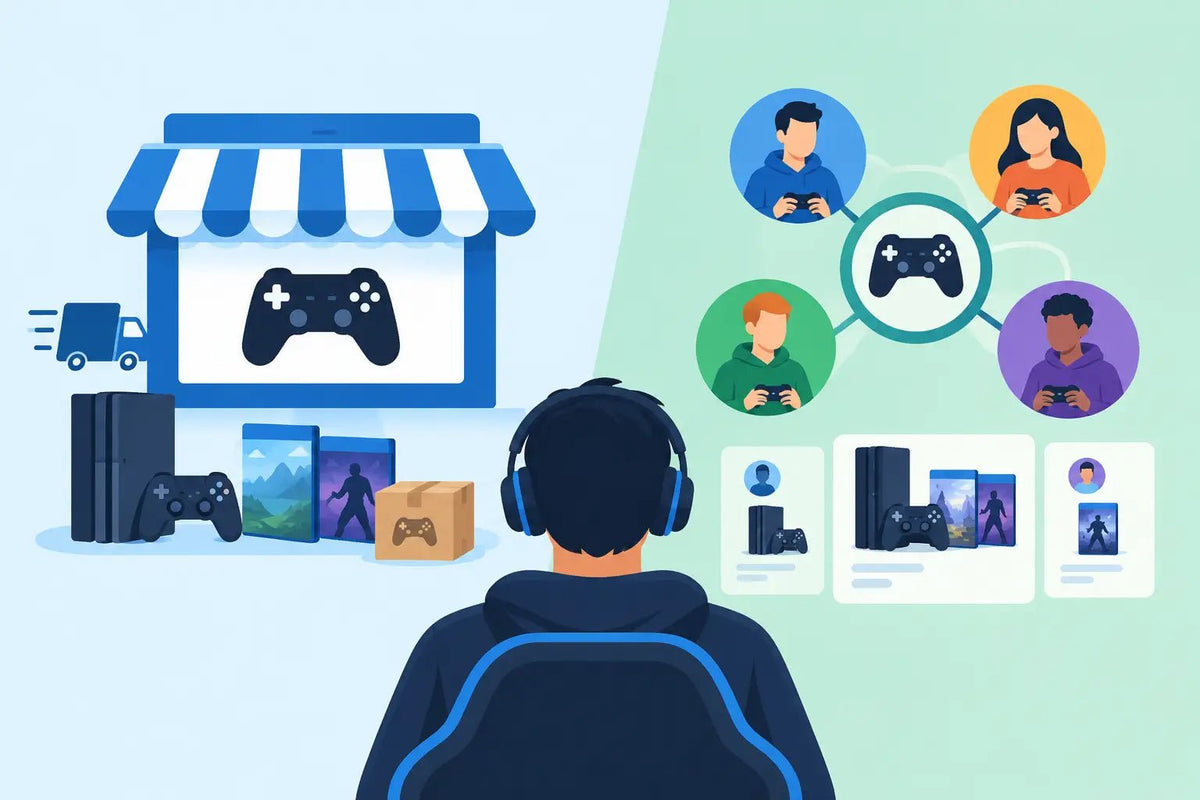
That rare pet, limited skin, or stacked inventory item can disappear from a trade chat fast. When you are ready to buy, the real question is not just, “What costs less?” It is whether direct sellers versus peer marketplaces give you the faster, safer route to the item you actually want.
Both options can get you virtual game items. But they work very differently behind the scenes. One is built around a store selling directly to you. The other connects you with another player who has an item to sell. Understanding that difference helps you avoid slow deliveries, confusing disputes, and the kind of sketchy trade that makes you wish you had never clicked checkout.
What Is a Direct Seller?
A direct seller is a store that owns or controls the inventory it lists and sells that inventory straight to the customer. You choose an item, pay the listed price, and follow the delivery instructions. There is no separate player deciding whether to respond, change the deal, or back out after you buy.
For gamers, the biggest benefit is predictability. A direct-selling platform can build its checkout, stock, and delivery process around speed. If the item is in stock, fulfillment can often happen automatically or through a dedicated delivery team. That is why direct sellers are a strong fit when you want an item now, not after an unknown seller comes online.
This model also creates clearer accountability. If there is a delivery issue, you contact the same business that took your payment. You are not stuck trying to convince an individual stranger to finish a trade.
What Is a Peer Marketplace?
A peer marketplace is a platform where individual users list and sell items to other users. The marketplace may handle payment, ratings, or dispute tools, but the seller is usually another player, not the platform itself.
There can be real upsides. Peer marketplaces may have unusual one-off items, older collectibles, or listings from players who are trying to sell quickly. If you know a game economy well and have time to compare listings, you may spot a deal.
The trade-off is that the experience depends heavily on the individual seller. One seller may deliver in minutes and communicate clearly. Another may be offline, cancel, send the wrong item, or try to move the conversation and payment somewhere less protected. A marketplace can set rules, but it cannot make every seller equally reliable.
Direct Sellers Versus Peer Marketplaces: The Big Differences
The choice usually comes down to four things: delivery speed, price clarity, safety, and support.
Delivery speed and convenience
Direct sellers are usually designed for quick fulfillment. Their inventory and delivery workflow are organized before you place an order, so there is less waiting for a person to accept the sale. This matters when you want to use a new item in your next session, finish a collection, or grab something before your friends hop off.
Peer marketplaces can be fast, but there is no guarantee. Your order may depend on a seller being awake, available, and willing to complete the transaction right away. Time zones, school, work, and simple forgetfulness can turn a “quick buy” into a long wait.
If speed is your top priority, a direct seller usually has the advantage. Look for a store that clearly explains its delivery method and gives realistic expectations instead of making vague promises.
Prices and hidden friction
Peer marketplaces often look cheaper at first glance because multiple sellers compete against each other. But the lowest listing is not always the best value. Check for service fees, payment-processing charges, currency conversions, and the risk of a seller canceling after you have already spent time placing the order.
Direct sellers typically show a set price upfront. That makes it easier to compare what you are actually paying. A good store may also run discounts, bundle deals, cashback offers, or loyalty rewards that lower the final cost over time.
Neither model wins every price comparison. Rare, player-owned collectibles may be more available through peers. For commonly requested pets, currencies, skins, and game items, a direct seller with strong inventory can be the better deal without the back-and-forth.
Safety and account protection
This is where players and parents should slow down for a second. No legitimate purchase should require you to hand over your game password, email password, two-factor authentication code, or full account access. Those details are not part of a normal item delivery process.
Direct sellers can reduce risk by using a consistent, explained delivery system. You should know what information is needed before you pay, such as a username, server details, or a trade request. The process should stay inside the game’s normal exchange mechanics whenever possible.
Peer marketplaces add another layer of risk because you are dealing with strangers. Ratings help, but they are not magic. Screenshots can be misleading, accounts can be newly created, and a seller with positive feedback can still pressure you into an unsafe off-platform deal.
A safe rule is simple: never pay through random gift cards, crypto wallets, or direct messages just because someone claims it will be cheaper. Keep payment and communication where there are clear records and support options.
Customer support when something goes wrong
With a direct seller, support should have one job: solve your order issue. You can provide an order number, explain what happened, and get help from the business responsible for the transaction. This is especially helpful for first-time buyers who do not know every game’s trading steps.
On a peer marketplace, support may need to investigate both sides. That can take longer, especially if the seller says they delivered and the buyer says they did not receive the item. Policies vary widely, and the marketplace may only be able to help if you followed its exact process.
Before buying anywhere, check whether the seller or platform offers clear contact options, delivery instructions, and a real path for resolving an issue. Silence after payment is never a good sign.
Which Option Is Better for Different Buyers?
A direct seller is usually the better match for players who want a straightforward purchase. You know what item you are getting, what it costs, and how it will be delivered. It is also easier for parents approving a purchase because there is less negotiation with strangers and less pressure to move outside the checkout process.
Peer marketplaces may make sense for experienced collectors hunting a very specific item that is not commonly stocked by stores. In that case, patience and careful seller research matter more than instant delivery. Treat it like a trade with extra safeguards, not like buying a snack from a vending machine.
For most high-demand items, convenience has value. Waiting hours, dealing with a cancellation, or sorting out a dispute can erase the small savings from a cheaper listing. BuyBlox focuses on the direct model for that reason: players can shop a broad selection, use safe payment methods, and receive clear delivery steps without sharing sensitive credentials.
How to Buy Virtual Items More Safely
No matter where you shop, take a few smart steps before checkout. Read the delivery instructions before paying, not after. Make sure the item name, game, quantity, and platform are correct. Use a payment method with a transaction record, and save your order confirmation until delivery is complete.
Be careful with urgency tactics from individual sellers. “Send payment in the next two minutes” is not proof that a deal is real. A legitimate seller can explain the process, answer basic questions, and complete the transaction without asking for your password or private codes.
Also remember that game rules matter. Use delivery methods that fit the game’s normal systems, and avoid anyone promising impossible account changes, secret exploits, or items that cannot be traded. If a deal sounds wildly better than every other listing, there is usually a reason.
The best place to buy is not always the one with the lowest number on the screen. Choose the option that gives you a clear price, a safe payment flow, a realistic delivery promise, and someone accountable if you need help. Your new item should feel exciting when it arrives, not like a gamble you have to chase down.
How to Compare Item Bundles Before You Buy
Why Orders Cancel and How to Fix Them Fast