
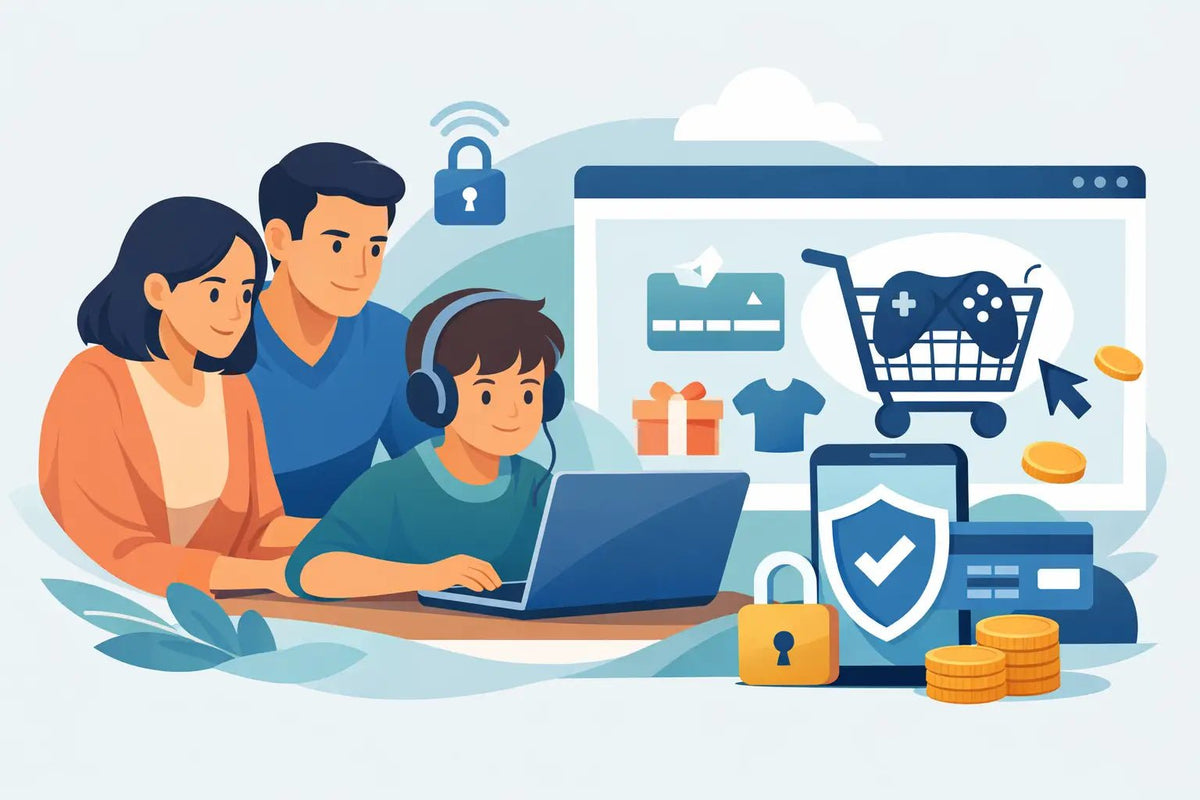
Your kid wants a rare pet, a limited skin, or extra in-game currency right now - and they want your card to make it happen. That is exactly why a parent guide to safe virtual purchases matters. The pressure is fast, the items feel real to them, and the wrong checkout can turn a small gaming buy into a scam, a charge dispute, or a compromised account.
The good news is that safe virtual buying is not complicated once you know what to check. Parents do not need to become gaming experts overnight. You just need a simple filter for spotting trustworthy sellers, setting limits, and making sure your child gets the item without giving away more information than they should.
Why virtual purchases feel riskier than they are
For a lot of parents, digital items feel vague. You can hold a toy or return a pair of shoes, but a game item is different. It exists inside an account, its value depends on the game, and delivery often happens through an in-game trade, code, or automated system.
That difference creates two reactions. Some parents say no to everything because it all looks sketchy. Others say yes too quickly because the amount seems small. Both reactions miss the middle ground. Virtual purchases can be perfectly fine, but they need the same common-sense checks you would use with any online transaction, plus a few gaming-specific ones.
The parent guide to safe virtual purchases starts with the seller
The first thing to verify is not the item. It is the marketplace or seller behind it. A flashy product page means nothing if the business cannot prove it delivers what it sells.
Look for clear signs of legitimacy. A trustworthy site explains how delivery works, what the buyer needs to do, how long fulfillment usually takes, and how support is handled if something goes wrong. It should also make it obvious that buyers never need to share passwords or full account credentials. If a seller asks for your child’s login, stop there.
Real businesses also make their trust signals easy to find. You should see plain-language safety messaging, visible support options, and clear checkout steps. If the site feels confusing on purpose, that is a bad sign. If it hides basic answers until after payment, that is another one.
For gaming purchases, speed claims should come with process clarity. “Instant delivery” sounds great, but it should be backed by a believable method, such as automated trade instructions or a defined handoff flow. Fast is good. Vague is not.
Know the biggest red flags before you approve anything
Most bad virtual purchases follow the same pattern. The offer is either too cheap to make sense, too urgent to question, or too invasive in what it asks from the buyer.
If a seller wants account passwords, backup codes, email access, or any information beyond what is needed to deliver the item, walk away. Safe purchases do not require handing over control of the account. The same goes for sellers pushing payment methods with no buyer protection or asking you to move the conversation off-platform right before checkout.
Be careful with social media deals and direct messages too. A child sees a screenshot, a trader promises a rare item, and the whole thing moves into chat. That is where pressure ramps up. “Only one left,” “send now,” or “I can do this cheaper if you pay with this app” are classic scam moves. Kids often read that as exciting. Parents should read it as a warning.
There is also a less obvious red flag: no delivery explanation. If you cannot tell how the item gets from the seller to your child’s account, you are guessing. Guessing is not a payment strategy.
Payment safety matters as much as item safety
A lot of parents focus on whether the item will arrive, but payment protection is just as important. A safe checkout should use standard card processing or another recognizable payment option with clear confirmation steps. You should receive an order record, and the charge should connect cleanly to the business you used.
Avoid workarounds that make the transaction harder to trace. Gift cards, peer-to-peer transfers, and one-off payment requests are where many families get burned. They feel quick, but they offer much less protection if the item never shows up.
It also helps to keep purchases separate from your main financial life. Some parents use a low-limit card or a dedicated payment method for game spending. That adds one more layer of control without turning every purchase into a fight.
Set rules before the item looks irresistible
This is where smart parents save themselves stress. Do not wait until your child is staring at a countdown timer for a limited pet or weapon skin. Set the ground rules ahead of time.
Decide what needs approval, what price range is fine, and which types of items are allowed. Some families are okay with cosmetic items but not random loot-style purchases. Others care less about the item type and more about the total monthly spend. It depends on your household, your budget, and your child’s age.
What matters is consistency. If your kid knows the rule is “ask before every purchase” or “anything under a set amount is okay from approved sellers only,” you remove a lot of pressure from the moment. The conversation becomes easier because the standard already exists.
You should also talk about account safety in the same breath as spending. Buying an item should never mean sharing passwords, clicking strange files, or joining random servers to claim a reward. A purchase is not worth an account recovery nightmare.
Teach your child how delivery should work
Kids are often better at games than adults, but that does not mean they understand digital commerce. One of the best things you can do is explain what a normal item delivery process looks like.
For many game-item purchases, delivery happens through a trade, in-game transfer, code redemption, or automated bot system. That means your child may need to be online, follow a short set of instructions, or confirm receipt inside the game. That is normal. What is not normal is being told to hand over the account, disable security features, or send an item first “for verification.”
This is where a marketplace with simple tutorials and clear support really helps. When the process is easy to follow, there is less room for panic and fewer chances that a child will click the wrong thing. BuyBlox, for example, leans into fast delivery and clear instructions because confusion is where trust breaks.
Keep expectations realistic
Not every issue means fraud. Sometimes there is a delivery delay, a trade cooldown, a typo in the username, or a game-specific limitation that slows things down. That is frustrating, but it is different from a scam.
This is why support matters. A legitimate seller should have a visible way to fix normal order issues. Parents should tell kids not to spiral if an item does not appear in thirty seconds. Check the order details, confirm the instructions were followed, and contact support through the business itself rather than replying to random messages.
At the same time, do not make excuses for truly bad signs. If support is unreachable, the payment trail is messy, and the seller starts changing the terms after payment, trust your instincts.
How to make virtual purchases a lot safer without banning them
The safest approach is not total shutdown. It is supervised access with a short checklist. Before any purchase, confirm the seller is legitimate, the payment method is protected, the delivery method is explained, and the transaction does not require sensitive account access.
Then look at the value question. Ask your child why they want the item, how long they have wanted it, and whether this is a one-time buy or part of a pattern. That conversation is not about killing the fun. It teaches them that digital spending is still real spending.
When parents treat game purchases like a normal part of online shopping - with rules, limits, and basic fraud awareness - kids learn better habits. They also stop seeing safety checks as punishment. It becomes part of the process, same as checking size before buying shoes.
Virtual items are exciting because they feel immediate, personal, and tied to the games kids care about most. That is exactly why they deserve a little extra caution. A calm yes, backed by a few smart checks, usually beats a rushed yes or a blanket no.
How to Purchase Blade Ball Swords Safely
Trading Versus Buying Game Items