
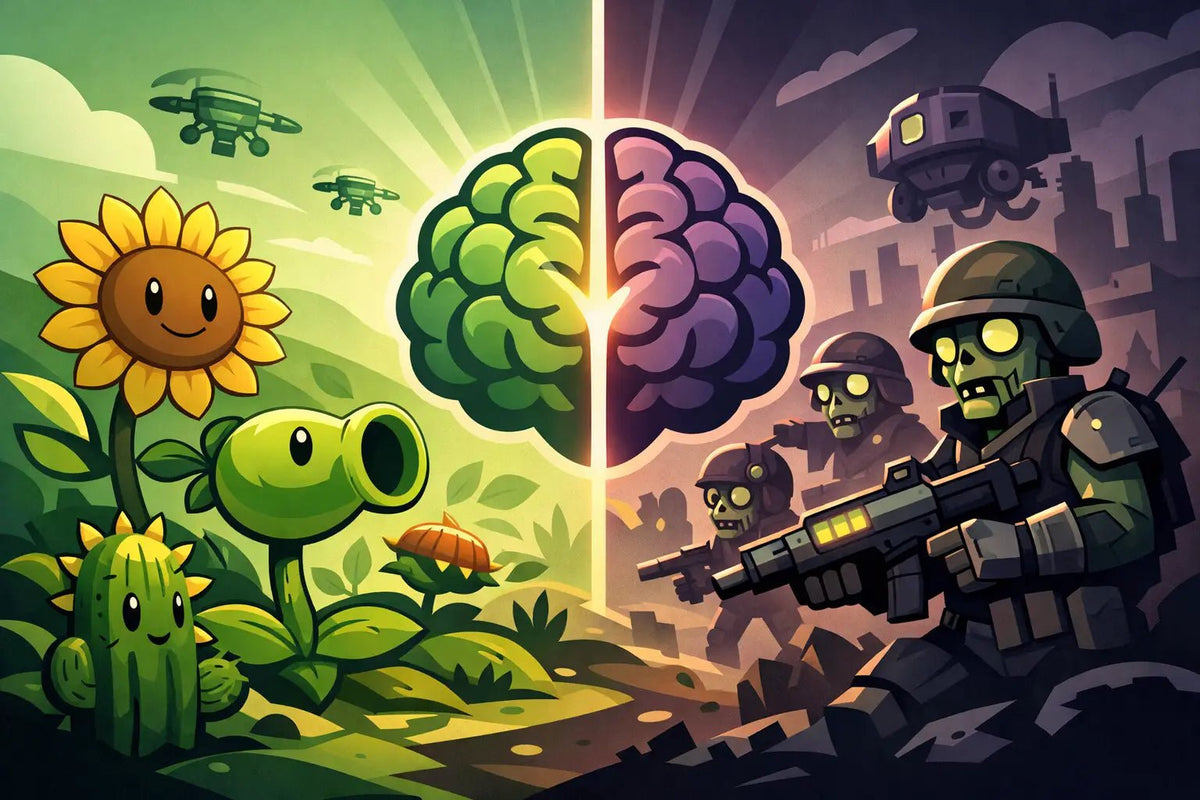
A rare unit can look like an instant win, then disappear under pressure because it was dropped in the wrong lane. That is the trap a lot of players hit. This plants vs brainrots units guide is about building a setup that keeps producing damage, protects your weak spots, and gives every coin a job.
Plants Vs Brainrots rewards smart placement as much as a stacked inventory. The best unit is not always the flashiest one. A lower-cost attacker that starts working early can carry more of a match than an expensive unit you cannot place until the board is already crowded.
What Makes a Unit Worth Using?
Before chasing a new plant or Brainrot, look past rarity. A useful unit earns its spot through damage, range, attack speed, area coverage, cost, and how well it fits the rest of your board. A high-damage unit with slow attacks may be great against chunky enemies but poor against a rush. A fast unit can clean up smaller targets, yet struggle when a tank reaches the end of the lane.
That is why a balanced loadout usually beats a board full of one type. You want early pressure, dependable lane damage, and at least one answer for enemies that survive your first line. If a unit only performs when everything goes perfectly, it is a luxury pick, not the core of your strategy.
Game balance can shift with updates, too. Treat tier lists as a starting point rather than a rulebook. Test a unit where it actually matters: in the lanes and waves where your current setup starts leaking.
Plants vs Brainrots Units Guide: Build by Role
Instead of asking, “What is the single best unit?” ask what your board is missing. Most winning teams have a few clear roles working together.
Early-game starters
Your starters are the units you can afford quickly and place without slowing down your next move. They should give reliable damage near the first contact point or cover a lane that tends to get rushed. Do not overspend on a dream unit while early enemies walk through an empty board.
A good opener creates breathing room. It lets you earn resources, see where the pressure is building, and save for stronger additions. If you keep losing before your expensive unit comes online, your issue is usually early-game coverage, not a lack of rare units.
Main damage dealers
This is the unit or pair of units doing most of your work after the first few waves. Main damage dealers need either strong range, fast and consistent attacks, or enough power to remove tougher targets before they reach your back line.
Place these where they can attack for the longest possible time. A powerful unit stuck at the far end of a short lane may get only a few hits. The same unit placed with a long sightline can put in work from the start of every wave.
Crowd-control and splash options
When enemies arrive in groups, single-target damage can get overwhelmed. Splash, piercing, slowing, or other crowd-control effects become much more valuable here. These units do not always top the damage chart in a quiet round, but they can save a run when multiple enemies stack in one lane.
Do not fill every slot with area damage, though. Splash units often need help finishing tougher enemies. Pair them with a focused damage dealer so crowds get softened up and tanks still go down fast.
Tank breakers and late-game carries
Late waves punish boards that only handle small enemies. Save room and resources for a unit that can pressure high-health targets. This could be a heavy hitter, a fast attacker with strong scaling, or a premium unit that covers a major weakness in your current setup.
The goal is not to place your strongest unit first. The goal is to place it when it can change the match. Build your foundation, stabilize the lanes, then add the unit that turns survival into a win.
Placement Wins Games
A great roster can still fail with messy placement. Start by identifying the lane that gets the most pressure. That lane deserves your most consistent damage, not just whatever unit you happened to place first.
Long lanes are prime spots for ranged attackers because they get more time to fire. Choke points are ideal for splash and crowd-control units because enemies bunch together. If paths overlap or a central tile covers multiple routes, reserve that position for a unit with strong range or area damage.
Avoid spreading damage too evenly when one lane is clearly the problem. Two mediocre defenders in separate places might lose to a single rushed lane. Concentrating your strongest tools where the wave breaks through is often the safer call.
Also think about attack overlap. Several units hitting the same lane is good until another route has zero coverage. After each placement, quickly check for dead zones. A board should have backup damage, but it should not leave an entire path open just to make one lane look stacked.
Spend Coins Without Throwing the Match
The fastest way to waste coins is buying a unit because it is rare, then realizing it does the same job as something you already own. Before spending, compare the new unit with your current weakest link. Does it fix weak early damage, improve crowd control, reach more lanes, or help against tanks? If the answer is no, save your currency.
Upgrades are also about timing. An early upgrade on a unit that attacks all match can be a smart investment. Dumping everything into one late-game piece while your first lane leaks is not. When resources are limited, stabilize first and scale second.
For players building a collection, prioritize units with flexible roles. A reliable ranged attacker or a strong splash option can fit many boards. Niche units can be fun and powerful, but they are better purchases after you already have a dependable foundation.
If you want to skip some of the grind for a specific unit, use a marketplace that makes the process clear and safe. BuyBlox focuses on quick delivery without asking for sensitive account credentials, which matters when you are buying digital items instead of risking sketchy trades or password-sharing requests.
Common Unit Mistakes to Avoid
One common mistake is copying a powerful build without copying the strategy behind it. A setup used for late waves may be terrible for an early push. Another is treating rarity as proof that a unit belongs in every match. Rare units can be amazing, but the right lane, timing, and support still matter.
Players also hold coins for too long. Saving is smart when your board is stable and you are close to an important purchase. It is not smart when an affordable placement would stop a leak right now. A small upgrade that survives the next wave is worth more than a big plan that never gets deployed.
Finally, do not ignore testing. Run a new unit in the same type of match a few times. Watch where enemies pile up, how often the unit attacks, and whether it changes the result. That tells you more than a flashy screenshot ever will.
A Simple Way to Improve Every Run
Use one match to learn, not just to win. When a lane fails, name the reason: not enough early damage, too many grouped enemies, weak tank damage, poor range, or bad spending. Then change one part of your loadout or placement next time.
That small habit stops random swapping and helps you build a lineup you actually understand. Start with units that cover your weak point, place them where they get maximum value, and keep enough flexibility to react when the waves get wild. The best board is the one that keeps winning after the hype unit is no longer enough.
How to Resolve Duplicate Orders Without Stress
Best Budget Blade Ball Abilities Worth Using